Category Archives: PLI Press

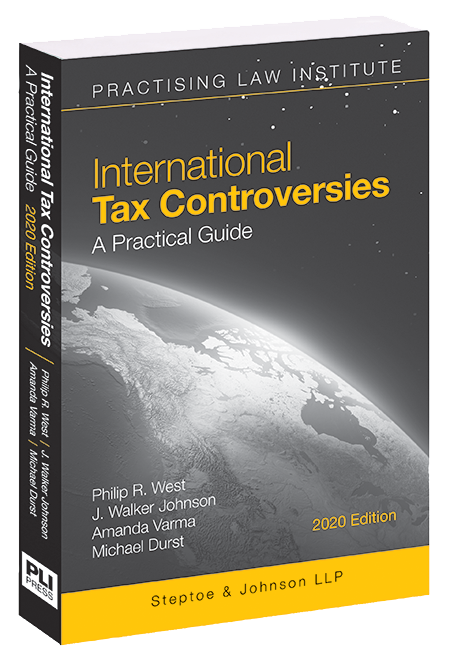
2020 Edition! International Tax Controversies

International Tax Controversies is a practical guide to handling international tax audits and appeals, government-to-government cooperation and special dispute resolution mechanisms, and litigating international tax cases. Disputes with the IRS regarding international tax issues often present special issues in addition to those normally relevant in purely domestic tax controversies.

For example, questions may arise regarding the application of attorney-client privilege and other protections in the cross-border context. Where relevant documents, witnesses, and other information are held abroad, special procedures may be applicable. In addition, special dispute resolution mechanisms may be available in international tax disputes involving tax treaties and transfer pricing. Taxpayers should also be aware of the potential impact on the competent authority process of entering into closing agreements. Finally, country-by-country reporting data will be changed by the United States pursuant to bilateral competent authority arrangements (CAAs) entered into in connection with tax treaties and TIEAs that permit automatic exchanges of information.

International Tax Controversies explores these and other relevant issues in international tax cases, in addition to the issues and procedures that commonly arise in U.S. federal tax audits (whether or not focused on international issues).

This essential treatise is available on PLI PLUS. If you would like to order a print copy, please contact libraryrelations@pli.edu.

Learn More about the Cannabis Industry with PLI PLUS

Marijuana has been called the fastest-growing industry in the United States — and it is one that every legal professional needs to be aware of. From regulation to decriminalization to dispensaries, the business of marijuana presents a complex array of legal issues.

PLI PLUS offers a number of resources available to attorneys navigating this topic, including:

  • State regulation of medical and non-medical marijuana
  • Federal law, enforcement, and preemption
  • Regulation of marijuana businesses
  • Implications of preemption on employment, taxes, and banking
  • Ethical issues in representing the cannabis client

Below we’ve highlighted some of our marijuana law content that may be of particular interest:

Blockchain Resources on PLI PLUS

Blockchain and distributed ledger technology have been dramatically transforming all industries, including the legal profession. The implementation of “smart contracts” is just one way blockchain technology directly affects lawyers and law firms.

The following are some of the many key blockchain-related topics that lawyers need to understand in order to effectively represent their clients:

  • The evolving landscape of token and ICO regulation
  • The expansion of blockchain technology and smart contracts
  • Legislative and regulatory initiatives affecting blockchain technology and digital assets
  • Intellectual property and blockchain
  • The mechanics of cross-border payments through correspondent banks and payment systems
  • Challenges and solutions for GDPR compliance

Below, we’ve highlighted some of our blockchain articles that may be of particular interest:

Technology Transactions Update

Technology Transactions: A Practical Guide to Drafting and Negotiating Commercial Agreements is an indispensable guide to drafting, reviewing, and negotiating technology transaction agreements. Editor Mark G. Malven, with more than twenty years of experience handling thousands of tech transactions and representing customers as well as technology vendors, combines his legal expertise and that of eleven other contributors from the legal and business worlds to deliver streamlined, practical, easy-to-access guidance.

This release presents the latest developments in the field, affecting most of the chapters in the book. Among the changes are:

  • Chapter 10, Information Security Agreements: This new chapter covers the drafting, review, and negotiation of information security (“InfoSec”) agreements. InfoSec agreements have become more prevalent in service provider relationships as a result of the explosion of electronic data coupled with increasing legal and regulatory risk associated with privacy breaches. InfoSec agreements go beyond the basic limitations on use and disclosure of confidential information covered by NDAs, for example, by imposing specific obligations for each information type covered, imposing obligations as to how the recipient must safeguard information, and allowing for audits of the recipient’s treatment of information. A sample InfoSec agreement is included.
  • Chapter 21, Enforcement of Online Terms and Conditions: This new chapter provides an introduction to enforceability considerations when drafting online terms and conditions, including browsewrap, clickwrap, and in-box contracting. It includes discussion of arbitration clauses in such contexts.
  • Chapter 17, Privacy: HIPAA and Business Associate Agreements: New section 17:6, Enforcement Actions, discusses recent enforcement activity by the U.S. Department of Health and Human Services Office for Civil Rights (OCR), including an action against the University of Texas MD Anderson Cancer Center for violations arising from the loss of a laptop computer and two thumb drives, each of which stored unencrypted PHI, resulting in the OCR’s imposition of $4.3 million in penalties, and another action against Anthem, Inc. pertaining to the unauthorized disclosure of nearly 80 million unencrypted patient records, resulting in a resulting in a resolution agreement with a settlement of $16 million, the highest settlement amount to date associated with an OCR-enforced unauthorized disclosure matter.

This essential treatise is available on PLI PLUS. If you would like to order a print copy, please contact libraryrelations@pli.edu.

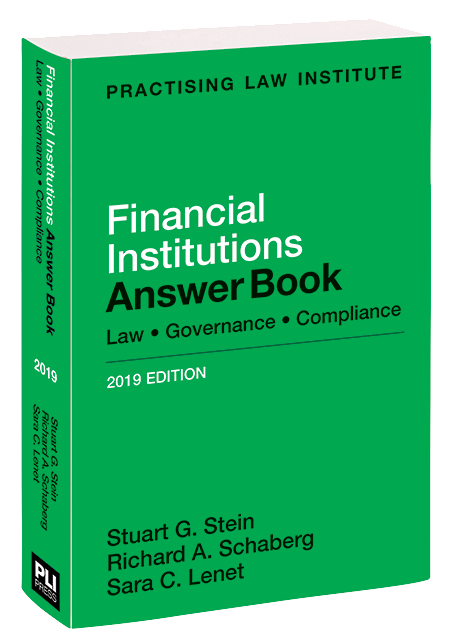
Financial Institutions Answer Book—2019 Edition just published!

Financial Institutions Answer Book provides a comprehensive overview of the complex federal requirements regulating financial institutions in the United States.

Every aspect of a financial institution’s life cycle is covered, from understanding the differences in regulation based on what type of charter is chosen, through ongoing capital and deposit activities requirements and major changes in corporate control, to the cessation of entity activity through merger, acquisition, or entity failure.

Financial Institutions Answer Book is a practical Q&A reference covering a range of topics related to law, governance, and compliance, including:
Creation of branch offices
Deposit Activity
Corporate governance
Executive compensation
Deposit insurance requirements
Insider and affiliate transactions
Anti-money laundering and U.S. trade sanctions
Examination and audit
Privacy and data security

Reflecting the increased federal concern with fraud, money laundering and protecting the federal taxpayer from bank defaults, individual chapters are devoted to describing in detail the federal enforcement agencies and their powers, anti-money laundering and other fraud issues, the required examinations and audit process, and recent regulatory approaches to problem banks and failure.

This Answer Book is available on PLI PLUS. If you would like to order a print copy, please contact libraryrelations@pli.edu.
Treatise Update: Trade Secrets

Trade Secrets: A Practitioner’s Guide is an indispensable resource that discusses all aspects of protecting trade secrets. It covers what a trade secret is, how it should be protected, and what to do when its secrecy is compromised. Trade Secrets examines in detail what trade secret misappropriation is, how can you prove it in court, how you can protect trade secret information during the course of litigation, and how you can gain appropriate legal and monetary remedies for clients for proven violations. It compares and contrasts trade secret protection with other forms of intellectual property such as copyright, patents, and trademarks.

This release updates and expands the text with new discussions of the law of trade secrets and related topics, including the following:

  • State statutory preemption of common law: The Fifth Circuit, reversing the district court in material part, held that the Louisiana Uniform Trade Secrets Act does not preempt civil law claims for conversion of information that does not constitute trade secrets (Brand Services, L.L.C. v. IREX Corp.). See § 1:5.5, at note 60.1.
  • Patent versus trade secret: In SAP America, Inc. v. Investpic, LLC, the Federal Circuit held that allegedly novel ideas for applying statistical techniques to financial information were unpatentable abstract ideas. If they were protectable at all, they were protectable as trade secrets. See §2:3.4, at note 87.40.
  • Secrecy: In CPI Card Group, Inc. v. Dwyer, the federal district court in Minnesota found that plaintiff CPI did not assure secrecy in emails that included alleged trade secrets. Although it could point to general measures it took to protect confidential information, “CPI has not shown a likelihood of proving that it took reasonable measures to protect the secrecy of the contents of this particular presentation.” See §4:13.1, at note 107.1.
  • Jury instructions: On December 6, 2018, the Florida Supreme Court approved changes in standard form jury instructions for trade secrets misappropriation cases; the new instructions are reproduced in chapter 12. See § 12:11.2, at note 127.1.
  • Remedies—disgorgement: In Texas Advanced Optoelectronic Solutions, Inc. v. Renesas Electronics America, Inc., the Federal Circuit held that a trade secret owner did not have the right to have a jury decide its claim for disgorgement of profits as a remedy for misappropriation. See § 13:3.5, at note 324.14.

This treatise is available on PLI PLUS. If you would like to order a print copy, please contact libraryrelations@pli.edu.
Updated for 2019! Corporate Political Activities Deskbook (2019 Edition)

Corporate Political Activities Deskbook provides a thorough grounding in the law of federal and state campaign finance, pay-to-play, lobbying, and gift compliance. It serves as a practical manual for attorneys who advise corporations about involvement in the political process.

Among the updates in this edition the 2019 Edition are the following:

This Deskbook is available on PLI PLUS. If you would like to order a print copy, please contact libraryrelations@pli.edu.

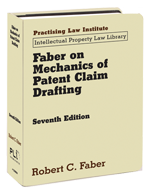
Treatise Update: Faber on Mechanics of Patent Claim Drafting

More patent applications are rejected because of claim drafting flaws than because of problems with inventions. A trusted working tool for more than two decades, Faber on Mechanics of Patent Claim Drafting spotlights proven claim drafting practices and techniques that have been firmly established by patent authorities and custom. Faber on Mechanics of Patent Claim Drafting also provides full coverage of U.S. Supreme Court and other court decisions critical to claim drafting.

In the latest release, author Robert C. Faber updates and expands his treatise with practical information and commentary on a variety of issues affecting patent claim drafting. Among the topics covered are the following:

  • Patent Office guidance: In November 2018 and January 2019, the USPTO issued updated guidance memorandums for examiners and administrative patent judges relating to (1) subject matter eligibility of patent claims under 35 U.S.C. § 101 and (2) examination of functional claim limitations under 35 U.S.C. § 112. The author highlights important points from these documents. See Chapter 1. Statutory Provisions—Some Basic Principles.
  • Preamble: The Federal Circuit notes that a preamble limits the invention if it recites an essential structure or step or is necessary to give life, meaning, and vitality to the claim. A preamble is not limiting when a patent claim defines a structurally complete invention in the claim body, which is after the preamble, and the preamble only states a purpose or intended use for the invention claimed (Acceleration Bay, LLC v. Activision Blizzard Inc.). See Chapter 2. Claim Forms and Formats in General.
  • Indefiniteness: According to a federal district court in Texas, when the specification has two different meanings for the same word or term, and the claim includes the different meanings for that word or term, the claim thereby lacks sufficient “objective boundaries,” so that the claim is indefinite and invalid (Intellectual Ventures LLC v. T-Mobile USA, Inc.). See Chapter 3. Apparatus or Machine Claims.
  • Claim differentiation: According to the Federal Circuit, if a dependent claim contains additional limitations not present in the independent claim, then—under the doctrine of claim differentiation—the limitations cannot be applied to limit the independent claim, since the specification does not limit the invention to those additional limitations (Knowles Electronics LLC v. Iancu). See Chapter 8. Nonart Rejections.

This essential treatise is available on PLI PLUS. If you would like to order a print copy, please contact libraryrelations@pli.edu.