New Edition: Sports Law 

Sports Law: A Practical Guide to Protecting the Interests of Athletes (Second Edition) provides lawyers, player agents, financial advisors, athletic directors, and other members of athletes’ advisory teams with the tools and understanding they need to protect their clients’ interests before, during, and after their professional careers. Packed with practice tips, sample documents and agreements, and unique insights, it is an essential resource for anyone who counsels or represents athletes.  

The newest edition dives into the latest changes in the NIL landscape (Chapter 11), stemming from the new model of college athletics, influenced by market forces, institutional compensation strategies, and judicial oversight. Author Luke Fedlam, a partner at Amundsen Davis, LLC and co-Chair of their Entertainment, Sports and Media Law Service Group, injects the book with insight on various topics such as marketing agreements (Chapter 6), intellectual property protection (Chapter 10), real estate development (Chapter 13), and the world of esports (Chapter 15).  

Order a print copy today.  

Free Form of the Month

PLI PLUS offers unlimited electronic access to more than 4,500 downloadable, searchable, and editable legal forms ready for use in your practice. In an effort to highlight this unique content type, we’ve selected one form per month and made it available for anyone to download for free – no subscription required.

May’s free form:

Healthcare Organization Change of Control Restrictive Covenants Clause

More information about Legal Forms & Checklists

  • Forms & Checklists Flyer – This flyer provides an overview of the forms & checklists on PLI PLUS and highlights a handful of popular examples.

Shining a Spotlight on Librarians

As National Library Week draws to a close, we would like to shine a spotlight on some of the librarians who have donated their time and expertise to “The Practising Law Librarian” podcast.

Taryn L. Rucinski – Giving Back to the Profession

Taryn Rucinski, Law Library Manager at the U.S. Court of International Trade, on the importance of law librarians:

“In a world drowning in information, we need a next generation of pioneers to help the larger legal community navigate information literacy at a very different level.”

A copy of this podcast transcript is available on PLI PLUS here.

Lawyer in the Library: A Conversation with Avery Le

Avery Le, Director of the Homer M. Stark Law Library, on the importance of AI in classrooms:

“I remember spending a lot of time on creating homework assignments and exercises and coming up with new hypotheticals. I think AI would be really helpful for that. We wouldn’t have to spend our time spinning our wheels trying to come up with new creative ideas.”

A copy of this podcast transcript is available on PLI PLUS here.

Embracing Change: The Law Librarian’s Journey

Zanada Joyner, Associate Director for Collections and Information Discovery at Francis King Carey School of Law at the University of Maryland, on providing access:

“The spirit here is definitely access and as much access as we can provide. That is consistent with the mission, the values, the priorities of the university and the university system, understanding that those are not always compatible with what librarians want to do.”

A copy of this podcast transcript is available on PLI PLUS here.


Finding Your Joy on PLI PLUS

This year’s National Library Week theme, “Find Your Joy,” features Mychal Threets as an honorary chair. Threets reminds us of the important link between the care for our mental health and the joy we can discover in library usage. Below is a roundup of practical and popular resources on PLI PLUS to help users nurture their well-being, thrive, and find joy personally and professionally.

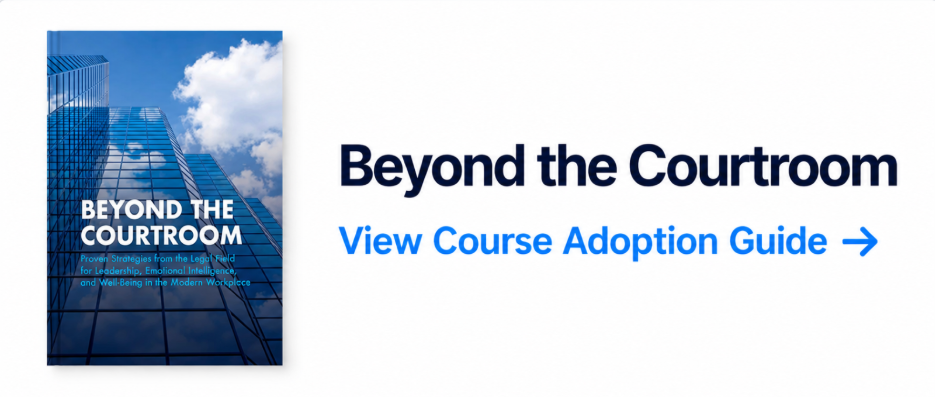
Beyond the Courtroom: Proven Strategies from the Legal Field for Leadership, Emotional Intelligence, and Well-Being in the Modern Workplace is a practical, evidence-based leadership book that translates the lessons, pressures, and interpersonal dynamics of legal practice into universal strategies for stronger leadership, management, emotional intelligence, communication, and well-being across all professions.

Taking Control of Your Well-Being: Mental Health and Wellness for Attorneys is designed to help attorneys manage their mental health by providing resources, techniques, and strategies for navigating the unique obstacles within the legal profession.

PLI PLUS also features transcripts tackling this topic, such as:

PLI PLUS also offers open access to periodical publications on the topic of mental health, such as the following articles included in the PLI Chronicle:

For more content on wellness and mental health for attorneys, browse the Attorney wellness practice area here: Attorney wellness

We’ve also compiled a research guide on the topic of wellness, which can be accessed here: Research Topic Guide on Wellness and Mindfulness. This includes sample searches and highlights even more helpful results.

Meet the PLI Library Team!

Happy National Library Week from our library team to yours! This year’s theme, “Find Your Joy,” focuses on the innumerable ways readers can cultivate joy through their utilization of libraries, inspiring all users to discover what sparks their individual joy.

Our team of dedicated librarians finds joy in helping the legal community access the resources they need. We look forward to helping you—schedule a one-on-one session with a PLI librarian today!

What’s New in PLI PLUS

We add content to PLI PLUS every month to ensure our subscribers have access to the most up-to-date and relevant secondary source legal documents. Renowned legal experts regularly update our acclaimed Treatises, Skills Books, Practice Guides, Course Handbooks, Case Summaries, Transcripts, and Forms to reflect recent changes and developments in the law.

Click here to see what we added in April 2026!

New Edition: Federal Bail and Detention Handbook 2026 

Federal Bail and Detention Handbook covers the Bail Reform Act of 1984, including relevant statutory language, legislative history and appellate case law, and “Practice Pointers” for defense counsel and government attorneys to utilize. This treatise examines each step of the process, such as requirements at the initial appearance; factors courts consider in determining whether bail should be granted; conditions that may properly be attached to a release on bail; proper procedures to be taken when there is a failure to appear; and appeal of orders of release and detention. 

Highlights of the new edition include the following new case discussions:  

  • A Sixth Circuit panel’s decision to uphold a district court’s consideration of the current climate of political violence when determining the circumstances of a charged crime (Chapter 4, Factors the Court Considers
  • The Tenth Circuit’s decision that a district judge’s order overrides a magistrate judge’s order, and subsequently that a court of appeals may not use a magistrate judge’s order to supplement an inadequate district judge’s order, specifically if the two orders differ on detention and release (Chapter 7, Orders of Release and Detention

Order a print copy today.  

Book Update: How to Write a Patent Application (Third Edition) 

How to Write a Patent Application (Third Edition) is teeming with drafting checklists, sample drafting language, documents, and drawings designed to walk the reader through each step of the process for preparing patent applications. This newly updated practice guide analyzes the latest USPTO initiatives and key decisions of the federal courts, while also providing practical suggestions and commentary from the author.  

Highlights of this update include:  

  • A discussion about the implications of AI tool usage on client confidentiality, and when the use of AI tools must be disclosed to the PTO (Section 4:3
  • A new section covering the pros, cons, and best practices for AI tools in patent searches (Section 5:6
  • The addition of abstract and nonabstract ideas as examples to lists of patentable subject matter (Sections 7:4.1[B] and 7:4.1[C]
  • Updates to drafting specifications to reflect expansion of the recommendations regarding machine-learning (Section 7:4.6
  • Inclusion of the Federal Circuit’s Entresto case, which found that a claim can cover after-developed-technology if the claimed subject matter is described (Section 8:5) 
  • A new section reviewing advantages and concerns of the use of AI in drafting patent applications (Section 9:5.11[W]

Order a print copy today.