Category Archives: PLI

New Edition! Sack on Defamation: Libel, Slander and Related Problems (5th Edition)

sack-on-defamationThe Fifth Edition of Sack on Defamation: Libel, Slander, and Related Problems is now available.

Written by Robert D. Sack, U.S. Circuit Judge, U.S. Court of Appeals, Second Circuit, and member of the adjunct faculty of Columbia Law School, Sack on Defamation provides in-depth coverage and analysis of the law of defamation, invasion of privacy and related torts. This seminal work covers the full range of issues, from the basic elements of a defamation claim and First Amendment protections to motion practice and appeals.

First published in 1980, Sack on Defamation remains an indispensable and authoritative resource in the field of defamation law and practice.

The new Fifth Edition features the latest cases on the standards of liability for private and for public figures, libel by implication, the single-publication rule, and pleading requirements in the federal courts. It offers expanded treatment of anti-SLAPP statutes, updates on privacy torts and “libel tourism,” and much more. And with a broader view, Judge Sack’s preface to the Fifth Edition assesses the state of defamation law and of the press in a changing political and social environment. It addresses the viability of the traditional concept of a marketplace of ideas in a time of “fake news,” talk of lowering the bar for libel plaintiffs, and the aggressive use of the privacy torts to seek recovery for statements not actionable as defamation because they are true.

As Judge Sack writes in the book,

“Information and what purports to be news are, instead, increasingly disseminated by a splintered array of digital, often home-made, media to cells of people who already agree with one another about what is being told them and its truth. Such media are fertile grounds for ‘confirmation bias.’ Subsequent discussion of what they report no doubt ensues, but it tends to be limited to those already persuaded. Their notions of what is true echo; they do not compete. If there is little serious interaction among people with different views on important issues, it is not literally or figuratively a “marketplace of ideas”; it is a Tower of Babel. A Tower of Babel seems to me to be virtually useless in the search for better ideas or a better society, government, or institutions.

If that is so, what effect has it on constitutional and other legal protection for the freedom of the press? If the marketplace metaphor is informed in part by the goal of enabling informed, vigorous debate, as the Sullivan Court suggested, what might or should the effect of its weakening be on its protection? If the New York Times no longer plays the role in public discourse and the dissemination of information and opinion that it did in 1960s, is the rule of Sullivan any the less wise or necessary?”

The update Treatise is available on PLI PLUS, our online research database.  If you’d like to order a print copy, please email libraryrelations@pli.edu or call 877-900-5291.

PLI’s New Guide to Financial Services Mediation!

Did you know that Mediation Can Be a Powerful Tool for In-House Counsel? Check out the interview below with the editors of PLI’s new Financial Services Mediation Answer Book (2017 Edition) .

(null)

(null)

Financial Services Mediation Answer Book is available on PLI PLUS, our online research database. If you’d like to order a print copy, please email libraryrelations@pli.edu or call 877-900-5291.
New Update! Faber on Mechanics of Patent Claim Drafting (7th Edition)

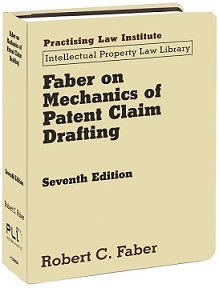
Release #4 is now available for Faber on Mechanics of Patent Claim Drafting (7th Edition)

Faber Patent Claim Drafting 7th ED“This work must be included in the library of anyone who considers himself or herself an attorney [in the field].” – The Licensing Journal
A trusted working tool for more than two decades, Faber on Mechanics of Patent Claim Drafting spotlights proven claim drafting practices and techniques that have been firmly established by patent authorities and custom. Faber on Mechanics of Patent Claim Drafting provides full coverage of U.S. Supreme Court and other court decisions critical to claim drafting. It is an indispensable guide for patent specialists and other intellectual property attorneys, corporate counsel, patent agents, patent officials, and inventors.  Among the topics covered in the recently updated book are the following:

  • Patent eligibility—computer-related claims: Several recent Federal Circuit opinions emphasize that patent claims directed to data processing or pure software can be patent-eligible. Software modifications that improve functioning or capacity of a known system are generally patent-eligible. This applies to improvements in computer functionality or solving technology-based problems, even with conventional generic components when combined in an unconventional manner. It is recommended to disclose and discuss the practical benefits of the claim in the specification. The differences from the art, the technological improvement, and the reasons for this may convert what appears to be known technology into something patent-eligible. See 1:5.5, at note 88.3.
  • “Visually negligible”: Words of approximation are not restricted to words like “about,” “approximately,” and “substantially.” The Federal Circuit held that “visually negligible” was definite because the specification provided examples of visually negligible indicators, namely an objective baseline to determine what is visually negligible based on what can be seen by the normal human eye, and neither the examiners nor the experts during prosecution and reexamination had apparent difficulty determining the scope of this term (Sonix Technology Co. v. Publications International, Ltd.). See § 3:19, at note 389.1.
  • Claims in continuing applications—claim construction: According to the Federal Circuit, where more than one patent derives from, that is claims priority to, a common parent, construction of the same claim in two or more of those patents should be the same, since they are all based off the same disclosure and specification (Trustees of Columbia University v. Symantic Corp.). See § 5:5, at note 43.1.

The updated Treatise is available on PLI PLUS, our online research database.  If you’d like to order a print copy, please email libraryrelations@pli.edu or call 877-900-5291.

2017 Edition – Foreign Account Tax Compliance Act Answer Book


FATCA Answer Book_NWForeign Account Tax Compliance Act Answer Book (2017 Edition) provides a detailed analysis of requirements with which U.S. taxpayers with overseas accounts must comply.
Written and edited by Matthew D. Lee (Fox Rothschild LLP), this question-and-answer guide walks the reader through every aspect of the Foreign Account Tax Compliance Act (FATCA) requirements. The book explains FATCA terms and concepts, identifies which foreign financial institutions (FFIs) are covered by the Act (over 155,000) and which countries (over 100) have signed, or indicated their willingness to sign, bilateral tax treaties with the United States (called Intergovernmental Agreements), and describes the obligations placed upon FFIs under the Act.

Additionally, Foreign Account Tax Compliance Act Answer Book provides guidance on how to create an acceptable compliance program and what is required to register as a foreign financial institution.

This new edition is available on PLI PLUS, our online research database. If you’d like to order a print copy, please email libraryrelations@pli.edu or call 877-900-5291.

The Current: The Journal of PLI PRESS

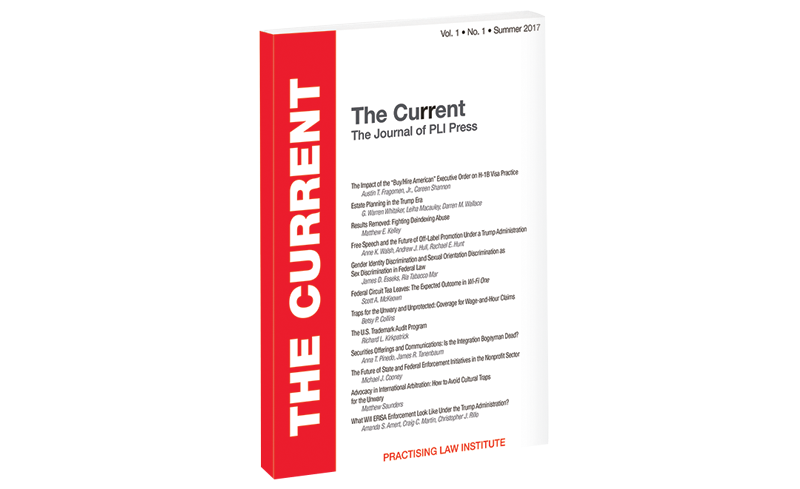
TheCurrentPLI Press is excited to announce its new quarterly journal, The Current: The Journal of PLI Press. Each issue of The Current will feature ten to twelve original articles, authored by leading experts including PLI authors and faculty members, and providing timely commentary and analysis of one or more key legal developments.

As the pace of change in the law – and the practice of law itself – continues to accelerate, so does the need for more current expert commentary and analysis.  The Current  intends to fill this need, providing practicing lawyers, academics, and members of the judiciary with insightful commentary and analysis of changes impacting the law and the legal profession.

Current topics include: Estate Planning in the Trump Era · The Impact of the “Buy/Hire American” Executive Order on H-1B Visa Practice · Results Removed: Fighting Deindexing Abuse ·  The U.S. Trademark Audit Program.

The Current  is available through your PLI PLUS subscription:

Journal on PLI PLUS


Not a PLI PLUS subscriber? Click here to sign up for a FREE digital version of The Current. The journal is also available here for purchase in print.

New Edition! Essential Trial Evidence: Brought to Life by Famous Trials, Films, and Fiction

Book - Essential Trial Evidence BookPLI’s Essential Trial Evidence: Brought to Life by Famous Trials, Films, and Fiction (2nd Edition) is a unique and insightful guide to the law of evidence. Author Martin A. Schwartz enlivens an intricate, technical subject by using engaging, evidentiary examples from popular culture to provide a strong understanding of the Federal Rules of Evidence and its interpretive case law, which represents the prevailing evidence law in the United States.

This unique instructive approach also provides an understanding of how popular culture sources inform jurors’ preconceptions about the trial process. Illustrations from famous cases, movies, novels, cartoons, and other media highlight the presumptions jurors bring to the courtroom.

Essential Trial Evidence: Brought to Life by Famous Trials, Films, and Fiction (2nd Edition) covers a wide range of issues, including relevance and unfair prejudice, the rule against hearsay and its numerous exceptions, recent developments in expert testimony, and the various impeachment methods.

You’ll receive clear guidance on the following:
– Differences between expert witness and lay witness testimony, including how courts handle the dual fact-expert witness
– Procedures for juror questioning of witnesses
– Admissibility of videotape evidence
– Recent developments under the Confrontation Clause
– Requirements for introducing electronic evidence,
– And more!

This essential new title is available on PLI PLUS, our online research database. If you’d like to order a print copy, please email libraryrelations@pli.edu or call 877-900-5291.

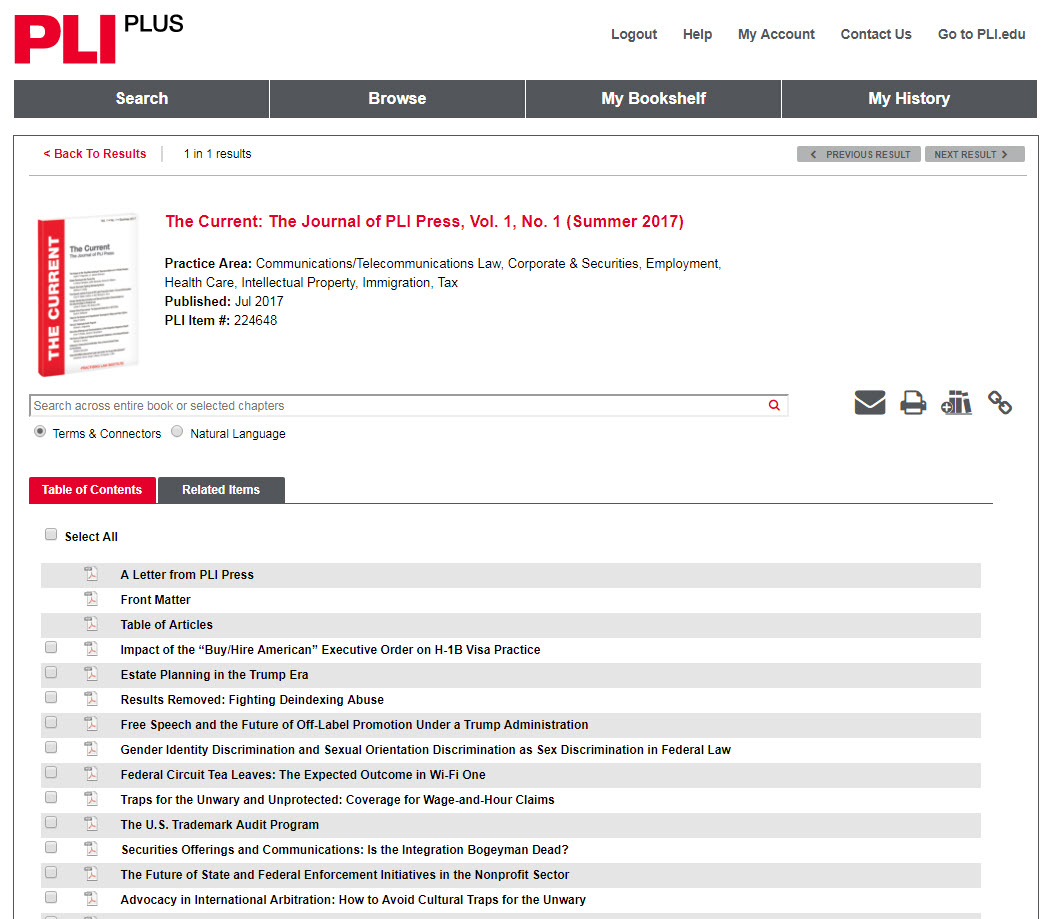
PLI PLUS Enhancement: Book Covers

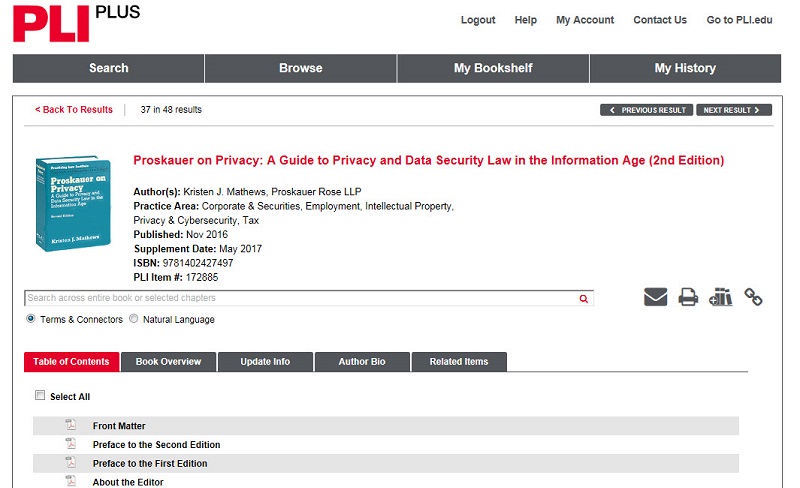
We have added book cover images to PLI PLUS platform.

If you’re accustomed to using PLI Press books in print, these images provide a useful and handy visual aid when accessing content on PLI PLUS.

Proskauer Book Cover

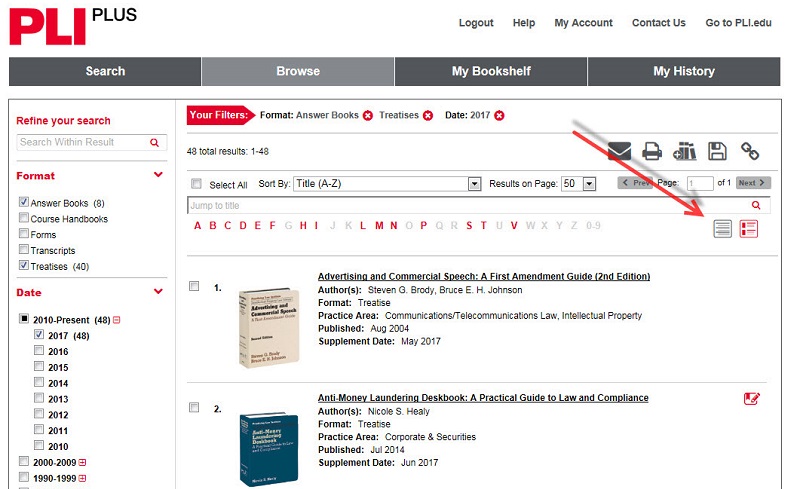
The Detail View is now the default option for viewing content in the Browse tab. It expands upon the List View and you can easily toggle between the two formats using the list icons.


Book cover detailed viewpost