Category Archives: Practice Areas

PLI Press Call for Student Papers

Practising Law Institute (PLI) is pleased to announce our first call for law student papers.

The PLI Chronicle is an open-access periodical available exclusively on PLI PLUS, the award-winning legal research platform of PLI Press. The Chronicle delivers timely and relevant discussions on hot topics — from laws, regulations, and policies, to industry developments and cutting-edge issues, to commentary on working in the legal and accounting industries. Check out the latest edition of the PLI Chronicle here.

Writing for the PLI Chronicle gives law students a direct line to PLI’s extensive userbase of 450,000 legal professionals — including 95% of Am Law 100 members, educators, government regulators, and thought leaders. This is a great opportunity for students looking to amplify their voices and connect with the minds that shape today’s legal landscape.

Topic: Emerging Discussions Around Artificial Intelligence

For this call for papers, the PLI Chronicle is seeking submissions that explore student perspectives on the intersection of artificial intelligence (AI) and the law. PLI invites submissions from students currently enrolled in law school.

Potential topics include — but are by no means limited to —

  • How and when to use AI as a law student
  • Being in law school while AI tools are rapidly developing
  • AI and plagiarism concerns
  • Entering the legal market as AI continues to reshape the practice of law
  • What excites you about AI? What are you nervous about?

DATES

The submission deadline is September 19, 2025. If selected for publication, you must be available for a brief editorial review process in late September/early October. The chosen publication(s) will be published in the October edition of the journal.

APPLY

We seek submissions that are no more than 2,500 words. Please submit your article as a Word file.Please do not include footnotes. Hyperlinks to outside sources are welcome.

Please email your article and a brief CV/resume by September 19, 2025, to Victoria Bonacasa, Publishing Coordinator, at vbonacasa@pli.edu. Please also state your law school and your graduation year.

Selected publications will be published in the PLI Chronicle and made available to public readership. Authors will retain copyright of their submissions but grant PLI a two-week exclusive license to publication. Contributors to the PLI Chronicle will have the ability to link directly to the article on PLI PLUS. If you have any questions, please contact Victoria Bonacasa at vbonacasa@pli.edu.

New Book! Sanctions and Export Controls Practice Guide

PLI Press is thrilled to announce the publication Sanctions and Export Controls Practice Guide. This clear and concise guide covers current key domestic and global regimes governing international trade restrictions and, importantly, also provides foundational knowledge of the field so that practitioners can effectively research existing requirements and develop compliance strategies as laws change. The book focuses on explaining relevant legal frameworks, compliance strategies, enforcement mechanisms, and recent trends, and there are numerous practice tips throughout. While the book primarily focuses on U.S. sanctions and export controls programs, it also covers multilateral regimes of the United Nations and the European Union, autonomous regimes of individual foreign nations, and coordinated regimes among nations. This book will serve as a useful guide for both specialists in international trade law and general practitioners representing companies and other entities that engage in cross-border transactions.

Order a print copy today.

PLI PLUS subscribers can access this title through their subscription.
Book Update: Friedman on Leases (Sixth Edition)

Friedman on Leases is a leading resource on commercial real estate leasing, offering comprehensive coverage of tenant and landlord issues. This twenty-third release continues to deliver not only the foundational knowledge required by novice practitioners, but also analysis of and insight into the most current and relevant developments facing seasoned practitioners in the commercial real estate field.

The new release (Release #23) includes the following updates:

  • Chapter 2, The Parties, updated discussion covers a recent Fourth Circuit decision involving the federal anti-harboring statute (Section 2:4).
  • Chapter 4, The Term—Possession, updated with the latest cases holding that although New York’s statute provides that a tenant may expressly waive the protections set forth in a lease, such waivers are unenforceable if the tenant is able to show that the landlord intentionally caused the delay (Section 4:2.1).
  • To aid in your research, the Table of Cases has also been updated.

Order a print copy today.

PLI PLUS subscribers can access this title through their subscription.
Free Form of the Month

PLI PLUS offers unlimited electronic access to more than 4,500 downloadable, searchable, and editable legal forms ready for use in your practice. In an effort to highlight this unique content type, we’ve selected one form per month and made it available for anyone to download for free – no subscription required.

July’s free form:

Best Practices for Pre-Breach Cyber Risk Management

More information about Legal Forms & Checklists:

  • Forms & Checklists Flyer – This flyer provides an overview of the forms & checklists on PLI PLUS and highlights a handful of popular examples.

Book Update: Bankruptcy Deskbook (Fifth Edition)

Bankruptcy Deskbook provides analysis of the current state of the law affecting all chapters of the Bankruptcy Code, along with practical advice for attorneys representing both debtors and creditors, in consumer and business bankruptcies.

Discussions of the following topics have been enhanced in this latest release (Release #22) to reflect recent rulings:

  • Bankruptcy court jurisdiction
  • Removal and remand
  • Fraudulent transfers
  • Disallowance of claims or interests
  • Willful failure to credit payments
  • Discharge injunction
  • Joint administration of estates
  • Third-party releases
  • Unsecured junior mortgages
  • Subchapter V eligibility

Order a print copy today.

PLI PLUS subscribers can access this title through their subscription.
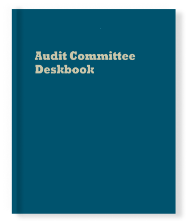
New Edition! Net Leases and Sale-Leasebacks

Net Leases and Sale-Leasebacks: A Guide to Legal, Tax and Accounting Strategies (2025 Edition) covers all aspects of the ownership, financing, documentation, taxation, and accounting for net leases with a focus on those areas where the treatment of net leases differs from the treatment of other forms of real estate investment. Given their unique characteristics, net leases may be regarded as belonging to their own asset class, and the real estate professionals practicing in this field need to be familiar with the distinct issues that may arise.

The new edition includes the following updates:

  • Chapter 2, The Lease, New section 2:2.5 discusses the tenant’s right of rescission, covering material breach by the landlord (including independent versus dependent covenants; constructive eviction; and landlord’s breach of the covenant to repair); mistake; and fraud.
  • Chapter 5, Tax Considerations, has been further expanded in several areas:
    • Subsection 5:1.3[A] covers tenant purchase options and SILO (sale-in, lease-out) transactions.
    • Subsection 5:3.9[A] discusses whether a section 467 loan can satisfy the requirements for qualified real property business indebtedness.
    • Subsection 5:7.3[C][1] discusses the exemption for transfer of a leasehold interest in Pennsylvania.
    • Subsection 5:9.1[D] expands the discussion of choice of entity for the owner-landlord.
    • Subsection 5:10.2[E] discusses layered allocations versus target allocations for partnerships.
    • Subsection 5:10.6 explores the difference in tax consequences between a sale and a redemption of a partnership interest.
    • Subsection 5:15 discusses solar federal tax credits in depth.

Order a print copy today.

PLI PLUS subscriberscan access this title through their subscription. 
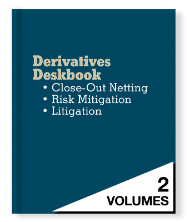
Book Update: Equipment Leasing– Leveraged Leasing

For over forty-five years, PLI’s Equipment Leasing– Leveraged Leasing has been the go-to resource for comprehensive legal, tax, economic, accounting, environmental, and insurance information to optimize leasing deals. The Seventh Edition updates readers on industry advancements, guiding them on whether to lease or buy, comply with leasing laws, draft agreements, achieve client goals, and minimize legal and financial risks.

The new release (Release #2) includes the following update:

  • Chapter 14A, Climate Finance Assets, discusses the use of capital investments in assets that mitigate or adapt to climate change, creating opportunities for financing new technologies like LED lighting, batteries, solar, wind, hydrogen, heat conversion, and geothermal. This chapter also presents information that is key to understanding the economics of the new technologies, the legal structures for financing them, and related issues.

The Table of Authorities and Index have also been updated to assist you in your research.

Order a print copy today.

PLI PLUS subscribers can access this title through their subscription.
Free Form of the Month

PLI PLUS offers unlimited electronic access to more than 4,500 downloadable, searchable, and editable legal forms ready for use in your practice. In an effort to highlight this unique content type, we’ve selected one form per month and made it available for anyone to download for free – no subscription required.

June’s free form:

Checklist for Responding to Search Warrants

More information about Legal Forms & Checklists:

  • Forms & Checklists Flyer – This flyer provides an overview of the forms & checklists on PLI PLUS and highlights a handful of popular examples.

New Title! Multidistrict Litigation

PLI Press is proud to announce the publication of the new treatise Multidistrict Litigation.

This brand-new treatise offers a detailed look at how multidistrict litigations (MDLs) work and the decision-making process of the Judicial Panel on Multidistrict Litigation (JPML). With its practical advice and valuable insights, this book is a must-have for lawyers in various fields, including antitrust, labor, patents, product liability, and securities. As MDLs become more common, readers can expect regular updates on the JPML’s latest decisions and analysis of new trends and developments.

Multidistrict Litigation is structured into seven chapters, and seven unique appendices:

  • Chapter 1, Overview.
  • Chapter 2, Multidistrict Litigation in Context.
  • Chapter 3, The Judicial Panel on Multidistrict Litigation: Powers and Limits.
  • Chapter 4, Centralization.
  • Chapter 5, Transferee Selection.
  • Chapter 6, Challenging the Panel’s Orders.
  • Chapter 7, Remand.
  • Appendix A, Published Centralization Orders.
  • Appendix B, Transferee Selection Factors.
  • Appendix C, 28 U.S.C. § 1407.
  • Appendix D, 28 U.S.C. § 2112.
  • Appendix E, Rules of Procedure of the United States Judicial Panel on Multidistrict Litigation.
  • Appendix F, Summary Rules of the United States Judicial Panel on Multidistrict Litigation.
  • Appendix G, Summary Statistics of the United States Judicial Panel on Multidistrict Litigation.

Order a print copy today.

PLI PLUS subscribers can access this title through their subscription.
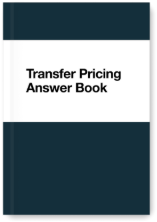
Book Update: Securities Law and Practice Deskbook

Securities Law and Practice Deskbook is a thorough guide to the Securities Act of 1933 (“Securities Act”), the Securities Exchange Act of 1934 (“Exchange Act”), relevant rules and regulations, and key case law. This book serves as an introduction to U.S. federal securities laws, providing a base for how securities lawyers tackle issues. It also acts as a general review and a first resource for seasoned practitioners when dealing with unfamiliar aspects of securities law.

Updated twice a year to keep pace with frequently changing rules and regulations, the new release (Release #25) includes the following updates:

  • Chapter 1, Approaching Securities Law, discusses the Commission’s announcement of a “sensible regulatory path” for crypto assets and the creation of a crypto task force. It also discusses Nasdaq’s withdrawal of its board diversity rule and the decision by ISS and Glass Lewis to stop considering diversity factors in board election recommendations. Additionally, the chapter highlights the Commission’s request to the Eighth Circuit to delay oral arguments on climate change rules, suggesting these rules might be withdrawn.
  • Chapter 5, Reach of Securities Act Regulation, discusses the Commission’s decision to pause several crypto cases in anticipation of a different regulatory scheme for digital assets.
  • Chapter 6, Securities Act Registration Exemptions, covers The PIPE and private placement markets.
  • Chapter 8, Securities Act Liability, discusses the courts’ stance on traceability in Securities Act claims. It highlights the Ninth Circuit’s decision in Slack Technologies to extend the traceability requirement to section 12 claims, following the U.S. Supreme Court’s strict tracing requirement for section 11 claims.
  • Chapter 9, Registration and Periodic Reporting Under the Exchange Act, discusses potential shifts in regulatory policy, particularly regarding climate change disclosures. It highlights actions by acting Commission Chair Mark Uyeda that may signal the possible withdrawal of these rules.
  • Chapter 10, Regulation of Proxy Solicitations, explores corporate reincorporation and its impact on shareholder protections under state laws. It discusses uncertainty in proxy advisory service regulations, the ongoing legal debate over classifying proxy voting advice for a fee as a solicitation, and a significant mid-proxy season change where the Commission Staff issued SLB 14M, which shifts the focus of no-action requests for exclusion under Rule 14a-8 back to the specific company’s business rather than broader issues.
  • Chapter 12, Fraud Under Rule 10b-5 and Related Issues, talks about the rise in securities lawsuits in 2023, especially those involving Artificial Intelligence. It mentions that the total value of these cases has grown significantly. The chapter also covers the appeal in a “shadow trading” case and the success of the Commission’s Whistleblower program, which has awarded over $2.2 billion. Lastly, it discusses penalties for companies that retaliate against whistleblowers.

Order a print copy today.

PLI PLUS subscribers can access this title through their subscription.