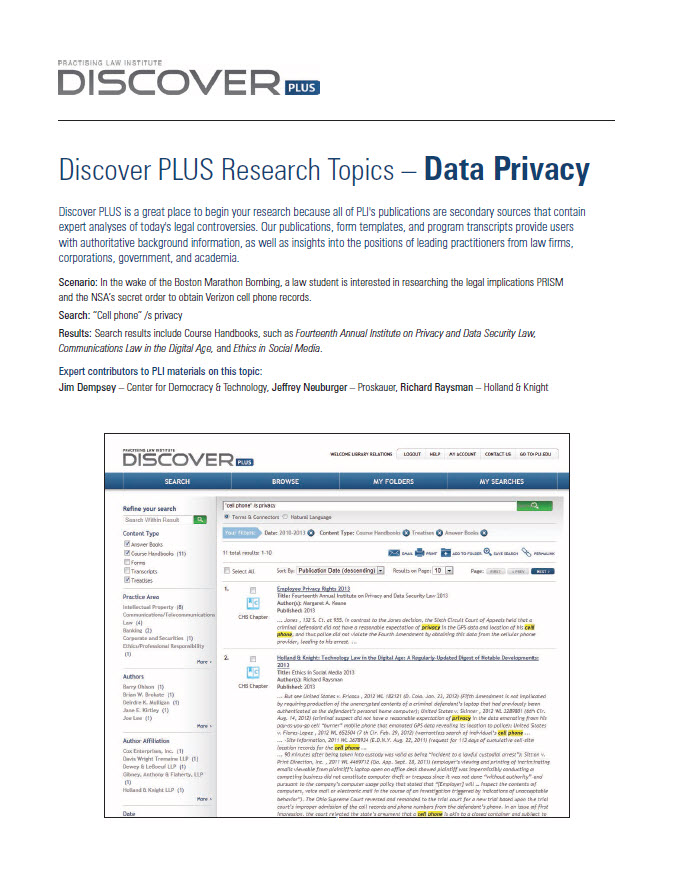
Research Topics: We created these Discover PLUS Research Topic Guides for those researchers interested in learning more about current legal issues from leading practitioners and experts.
Research Topics: We created these Discover PLUS Research Topic Guides for those researchers interested in learning more about current legal issues from leading practitioners and experts.


Harvard Law School has access to PLI’s Discover PLUS and the Harvard Law School Library let their patrons know about PLI’s eBook library platform via their ‘Ask a Librarian!‘ page.
Do you subscribe to Discover PLUS? If so, a blog post or library page is a great way to spread the word to your patrons. Contact the PLI Library Help Desk for images and information you can add to your blogs, intranet, subject guides, practice area pages, listservs, or any other way you’re reaching your patrons!


Come follow us on Twitter!  @PLI_Librarian
The PLI Library Help Desk tweets about Practising Law Institute programs and publications, Discover PLUS, eBooks, law libraries and more.
Questions or Comments? Email libraryrelations@pli.edu or Call 877-900-5291.
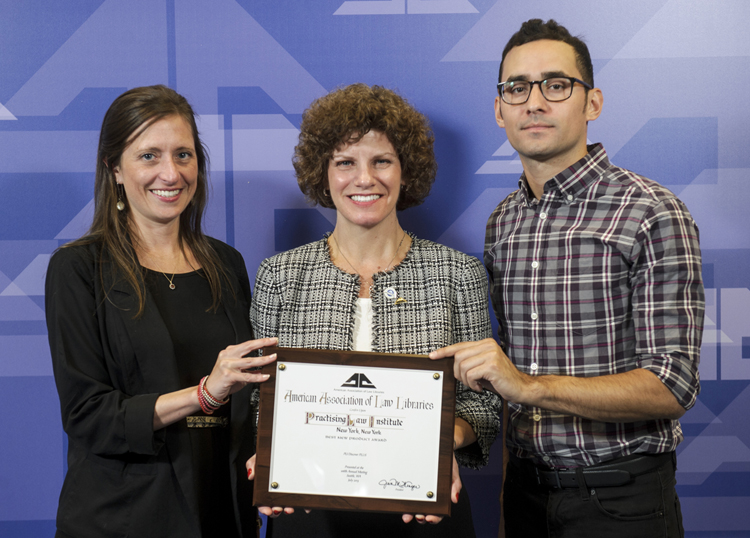
(Left to Right): Alexa Robertson, Director of Library Relations, Jean Wenger, AALL Immediate Past President, Andrew Pantoja, Associate Publisher
 Being a PLUS subscriber means you have the benefit of instantly receiving our new content. PLI is excited to announce that we’ve added 400 additional legal forms to Discover PLUS so you now have nearly 2,000 forms at your fingertips.
Based on the feedback we received, our customers need fast, up-to-date access to legal forms. You can search, download, customize, email, and print forms from 24 practice areas. PLI is committed to delivering critical and competitive value to our Discover PLUS customers, and as such, we will continue to add forms to Discover PLUS on a quarterly basis.
Stay tuned for upcoming updates!
If you have any questions or comments, please contact the PLI Library Help Desk:
libraryrelations@pli.edu
877-900-5291
Listed below are the PLI Course Handbooks that were published in June 2013
Corporate Law and Practice
Intellectual Property
Litigation and Administrative Practice
Tax Law and Estate Planning
If you have any questions or would like to order a title, please email the Library Relations Help Desk or call 877-900-5291.
 EPA Compliance and Enforcement Answer Book 2013, PLI’s new Answer Book, has been getting rave reviews! Check out the latest review from Delaware Environmental Law Blog here and below. If you have any questions or would like to order the book, please email the PLI Library Relations Department or call 877-900-5291.
Book Review: PLI’s New “EPA Compliance and Enforcement Answer Book 2013” is Worth the Price
By: Stephanie L. Hansen July 26, 2013
Adam Sowatzka & Richard E. Glaze, Jr. 2013. EPA Compliance and Enforcement Answer Book 2013I. Practising Law Institute: New York. 330 pages. $255.00 from publisher; $232.75 from Amazon.com
Practicing Law Institute (“PLI”) has a new publication out that addresses EPA and, to the extent similar, State enforcement of environmental laws. To be frank with you, I don’t have any handbooks like this on my shelf and I wasn’t so sure one might be helpful. Before heading off to law school, I worked for the state environmental regulatory agency for eight years as a scientist and regulator, and I have a pretty good idea how enforcement actions are approached by the state. I also know that EPA enforcement is a different animal, but there are similarities.
So, I was surprised at how useful this book really is. It’s a practical book that I found I could begin using immediately. It isn’t a textbook, so if you want anything more than a very brief overview of the major environmental laws, look elsewhere. However, in order to concentrate the enforcement action information and keep the book as practical and useful, more background information on the major environmental laws would have been a distraction.
There are a couple of sleeper chapters on compliance monitoring and reporting and an overview of major federal environmental laws, and a couple of chapters with narrow subject matter that you may not come across in your practice (citizen suits, and imminent and substantial endangerment authority). But the bulk of the book is a behind-the-scenes look at how EPA approaches different kinds of enforcement actions (administrative, civil, and criminal), the interaction between state regulators and EPA, how penalties are calculated, and practical advice on regulatory inspections. Good stuff.
If, in your environmental practice, you have any interaction at all with EPA, then this is a book you need to have – not just in your office, but somewhere you can easily reach. It’s written in a question and answer format so that it’s an easy read, and importantly, it comes with a lot of tables and footnotes citing the myriad of EPA regulations, guidance documents, and important case law at the end of each chapter. I have already printed out three documents from the footnotes that have immediate, practical use in my practice. I can see how the table on EPA penalty amounts under the various federal programs, adjusted through time, will be a great resource as well as the table listing the EPA penalty policy documents under various programs. Also helpful is the table with links to EPA memoranda on supplemental environmental projects and a good discussion on bankruptcy and its effect on enforcement actions. I also like the way the book breaks down the subject matter of each chapter into discussions under CERCLA, RCRA, CAA, CWA, etc., and how it gets into the details and practicalities of enforcement actions (all kinds) under each of the major federal environmental laws.
EPA regulators are different than state regulators. Although they often share enforcement authority with the state regulators and the processes they use to come to conclusions may be similar to those employed by state regulators, they have different priorities and dealing with them requires a different mindset on your part. This book will help you understand the terrain and, importantly, will point you to additional reference material if you need to go deeper (which you undoubtedly will).