Category Archives: Just for librarians

Interview with Legal Reference Librarian: Sheila Doherty

 Sheila Doherty currently works as a Reference Librarian at Willkie Farr & Gallagher LLP.

What made you decide to specialize in legal librarianship?

I used to be a Social Studies teacher, so I taught about the development of governments throughout the world. While I left that profession after three years, I have always enjoyed learning. I thought working in a law firm would be interesting, so I spent one year at the Palmer School (Long Island University) alternating between their four campuses and one legal class at Queens college to be sure and get the most out of my education. As a reference librarian at Willkie Farr & Gallagher LLP, I do legal and corporate research. I’m glad to say that it is better than I ever imagined.

How do you feel technology has changed the role of the library in your law firm?

Quite honestly, the thought of working with books alone kept me away from librarianship. It is something that just did not appeal to me. With the advent of internet search engines, I learned to love finding facts quickly. As I honed this skill, the field of librarianship became an option that was not there in the past. As a newer librarian, I only hear about the past from more experienced librarians. To sum up their thoughts in a sentence, it was much slower paced. With the incredible advances in technology, there is a “I need this NOW” attitude that did not exist in the past.

What do you like most about your career?

I love always learning. As a reference librarian, I do not have a niche, and this means there is always a new question or challenge to make the day more interesting.

Do you still use books or do you find you do most of your research online? Which books? Which online resources?

It really depends on the question. If people need an overview, print treatises are still best to flip through. If the question is very specific and would require many resources to answer it, online is best.

Do you still use the “reference interview”? Do you find most of your questions come in via email, phone, person?

In a way, yes. Most questions come in e-mail form, and these can get a follow-up e-mail or phone call to ask for more details. However, if a person calls the library, we can perform the reference interview right then. This is much better, especially for newer attorneys, as it allows us to use our experience to shape their questions.

Can you discuss a particularly challenging reference question?

Well, it has been five years, and there have been countless challenging questions. I would have to say that the challenge has very simple origins. The longer I do this, the easier it seems to become. Of course, there are still plenty of questions that require a great deal of thought and effort, but the process by which you answer them becomes easier. Going back to your previous question, I absolutely still use the reference interview. In fact, the more experience I get, the better that interview becomes. Practice really does make perfect!

PLI Listserv

I’d like to invite you to subscribe to PLI’s Library Relations Listserv.  The listserv was created as a result of librarians’ feedback.  This will be a resource for librarians to get the information they need from PLI without having to  check our website.  It is a forum to stay apprised of treatise supplementation—we’ve been trying to find a better way to let you know when our titles are updated.  In addition, we will let you know about any PLI Library Programs, new titles, Ebook Library notifications or anything else that concerns our library customers.

This listserv is moderated so you will only receive messages we send (about 4 per month). 

If you’d like to sign up please email libraryrelations@pli.edu

Librarians & the Silver Screen

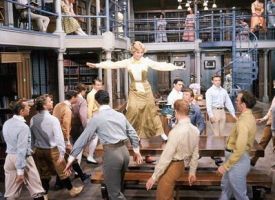
Happy Friday!  What do you plan to do this weekend?  If you have time, rent a movie that features a librarian in a central role.  Check out the Huffington Post’s Librarian’s Save The Day!  11 Great Movies in Which They Star.  “While writers might seem more glamorous, librarians are the quiet heroes of the literary world. They stand up against censorship, they uncover ancient mysteries, they laugh in the face of computerization and stop the corporate world dead in its tracks.”
Research = more than just Wikipedia

There was an interesting article in the Chicago Tribune titled: Yes, students, there’s a world beyond Wikipedia.  And while legal librarians might not need to worry about this with their patrons – public and school librarians do need to worry about it.  And of course, many of us are parents and this applies to children’s research habits.  School librarians are doing their best to teach the next generation how to harness the power of the internet.  The article suggests some creative sites that can be used in school projects.

Why Ban Books?

And as a follow-up to the Banned Book Week announcement, here are The Top Ten Ludicrous Reasons To Ban A Book.


1. “Encourages children to break dishes so they won’t have to dry them.” ( A Light in the Attic, by Shel Silverstien)
2. “It caused a wave of rapes.” ( Arabian Nights, or One Thousand and One Nights)
3. “If there is a possibility that something might be controversial, then why not eliminate it?” ( Bury My Heart at Wounded Knee, by Dee Brown)
4. “Tarzan was ‘living in sin’ with Jane.” ( Tarzan, by Edgar Rice Burroughs)
5. “It is a real ‘downer.’” ( Diary of Anne Frank, by Anne Frank)
6. “The basket carried by Little Red Riding Hood contained a bottle of wine, which condones the use of alcohol.” ( Little Red Riding Hood, by Jacob Grimm and Wilhelm K. Grimm)
7. “One bunny is white and the other is black and this ‘brainwashes’ readers into accepting miscegenation.” ( The Rabbit’s Wedding, by Garth Williams)
8. “It is a religious book and public funds should not be used to purchase religious books.” ( Evangelical Commentary on the Bible, by Walter A. Elwell, ed.)
9. “A female dog is called a bitch.” ( My Friend Flicka, by Mary O’Hara)
10. “An unofficial version of the story of Noah’s Ark will confuse children.” ( Many Waters, by Madeleine C. L’Engle)

Banned Book Week is September 25 – October 2, 2010

Banned Book Week was started in 1982 as a response to challenges to remove certain books from libraries, schools, and bookstores.   It is a week to celebrate and promote our freedom to read. 

Below is a list of the top ten most challenged books of 2009, according to the American Library Association.  Click here to read more about Banned Book week.

1. ttyl, ttfn, l8r, g8r (series), by Lauren Myracle
Reasons: Nudity, Sexually Explicit, Offensive Language, Unsuited to Age Group, Drugs

2. “And Tango Makes Three” by Peter Parnell and Justin Richardson
Reasons: Homosexuality

3. “The Perks of Being A Wallflower,” by Stephen Chbosky
Reasons: Homosexuality, Sexually Explicit, Anti-Family, Offensive Language, Religious Viewpoint, Unsuited to Age Group, Drugs, Suicide

4. “To Kill A Mockingbird,” by Harper Lee
Reasons: Racism, Offensive Language, Unsuited to Age Group

5. Twilight (series) by Stephenie Meyer
Reasons: Sexually Explicit, Religious Viewpoint, Unsuited to Age Group

6. “Catcher in the Rye,” by J.D. Salinger
Reasons: Sexually Explicit, Offensive Language, Unsuited to Age Group

7. “My Sister’s Keeper,” by Jodi Picoult
Reasons: Sexism, Homosexuality, Sexually Explicit, Offensive Language, Religious Viewpoint, Unsuited to Age Group, Drugs, Suicide, Violence

8. “The Earth, My Butt, and Other Big, Round Things,” by Carolyn Mackler
Reasons: Sexually Explicit, Offensive Language, Unsuited to Age Group

9. “The Color Purple,” Alice Walker
Reasons: Sexually Explicit, Offensive Language, Unsuited to Age Group

10. “The Chocolate War,” by Robert Cormier
Reasons: Nudity, Sexually Explicit, Offensive Language, Unsuited to Age Group