We add content to PLI PLUS every month to ensure our subscribers have access to the most up-to-date and relevant secondary source legal documents. Renowned legal experts regularly update our acclaimed Treatises, Course Handbooks, Answer Books, Transcripts, and Forms to reflect recent changes and developments in the law.
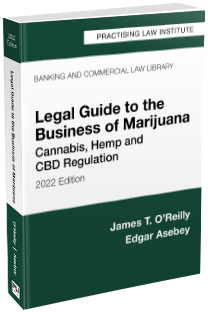
Updated annually, the book is a unique resource offering critical guidance on a wide range of interrelated topics for lawyers who represent clients in the fast-growing legal cannabis industry. It sorts through the complex and varying state regulation of medical and non-medical marijuana with an appendix providing the latest key state legislation (see Chapter 3 and Appendix C).
It also looks into the various aspects of establishing and managing a marijuana enterprise, including the growing, licensing, labeling, transporting, and distribution of marijuana and related products (see Chapters 7, 10, 11, 13, and 15). In addition, the guide addresses federal law, enforcement, and preemption and their implications for employment, taxes, and banking (see Chapters 8 and 9).
For lawyers new to representing cannabis clients, the authors provide an understanding of the definitions of marijuana and other cannabis products, as well as a review of the policy and political issues that have led to the controversy and uncertainty of the current environment (see the Table of Contents).
Written by First Amendment experts, Advertising and Commercial Speech: A First Amendment Guide focuses on how the Supreme Court’s commercial speech doctrine affects advertising in nearly fifty industries and professions including for the services of accountants, doctors and dentists, lawyers, pharmacists, educators, and more.
Among the many topics discussed in this new release are the following:
Lanham Act and misappropriation claims: New material in section 9:2 discusses two major post-Ariix decisions from federal courts in San Francisco involving failed lawsuits seeking to leverage the Lanham Act as a basis for challenging Facebook’s efforts to police its website against the spread of online misinformation.
Compelled commercial speech—housing: A revised section 12:11 examines a case from the Eastern District of New York involving a challenge by “five small landlords” to an emergency state eviction moratorium law enacted in the middle of the COVID-19 pandemic.
Taxation of media: An update to section 13:4.1 covers a case from the Ohio Supreme Court regarding whether a billboard tax violated the First Amendment’s protections for freedom of speech and freedom of the press.
Regulation of advertising content: Cases added to chapter 14 include:
Florida proceedings challenging the state’s law that prohibited cruise lines from requiring passengers to provide COVID-19 vaccination or post-infection recovery documentation prior to boarding (see section 14:2); and
Fair housing cases dealing with a Seattle ordinance that precluded landlords from taking adverse action against tenants and prospective tenants based on criminal history and a case in New York involving a law that prohibited landlords from “threatening” residential or commercial tenants based on the tenant’s COVID-19 status (see section 14:17).
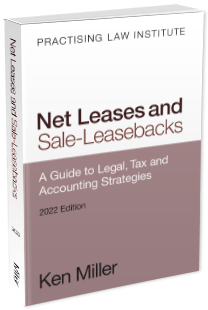
The treatise covers all aspects of the ownership, financing, documentation, taxation, and accounting for net leases with a focus on those areas where the treatment of net leases differs from the treatment of other forms of real estate investment. It includes in-depth guidance on sophisticated and complex structuring issues, particularly with respect to the latest tax and financial accounting rules, and provides readers with several appendices to assist with the nuts and bolts of net leasing practice, including a sample Net Lease and a sample Ground Lease.
Highlights of the 2022 Edition include:
Tenant Purchase Options. Chapter 2 (The Lease) has been updated with an expanded discussion of the risks to the landlord arising from a tenant purchase option.
Tax Considerations. Chapter 5 (Tax Considerations) has been updated with new material on section 1031(f) and related party exchanges, allocating interest payments between deductible and non-deductible uses, transfer tax liability, series LLCs, promoted interests, and more.
Sample Net Lease: Appendix E (Sample Net Lease) has been updated with new Force Majeure and Right to Go Dark provisions.
Bankruptcy Deskbookguides you step-by-step through the bankruptcy laws and all chapters of the Bankruptcy Code. It clarifies the purpose, features, mechanics, advantages, and drawbacks of Chapters 7, 11, 12, and 13 in the era of BAPCPA. It also keeps you up-to-date on legal developments, analyzing recent Supreme Court, court of appeals, and bankruptcy court decisions. With its practical guidance, the book enables you to help clients achieve fair remedies and ensure the prevention of legal problems along the way.
Some of the important new developments discussed in this release include:
A court ruling regarding whether proper completion of Official Form 105 satisfies the minimum pleading requirement for an involuntary petition in the face of a debtor’s motion to dismiss for failure to state a claim under Rule 12(b)(6) of the Federal Rules of Civil Procedure (see Section 3:5).
A circuit split as to whether the Supreme Court ruling in BFP applies to tax foreclosures conducted in accordance with state law (see Section 6:4.3).
A Sixth Circuit decision in which the court considered the adoption of a six-month look-back rule that would permit a debtor to continue making post-petition voluntary contributions to a retirement account at the same level that was contributed during the six months prior to the petition (see Section 13:3).
Recent case law on various elements of a subchapter V case, on which courts are not in full agreement (see Section 11:12.2).
Additionally, the deskbook’s chapters are supplemented with discussion of recent rulings on jurisdiction, avoidance of powers, automatic stays, distribution of estate property, claims and interests, discharge and dischargeability of debt, employment of professionals, Chapter 7, Chapter 11, Chapter 13, and other topics.
Regularly updated, Langer on Practical International Tax Planning gives you the latest news on the legal, tax, business, financial, social, political, technological, geographical, and regional factors to consider when developing and implementing customized planning strategies for clients. It is an invaluable tool for tax and estate planners, tax attorneys, accountants, and sophisticated investors.
This new release updates the treatise with up-to-date practical information and analysis to help preserve your clients’ assets.
Highlights include:
Revised section 2:4.2 explores the Tenth Circuit holding about whether the government had the right under section 7345 to revoke the passport of a “seriously delinquent taxpayer.”
New section 6:8 recognizes that there are a number of different types of Son-of-Boss transactions, but identifies what they all have in common.
Revised sections 8:5.6, 50A:3, 52B:2, and 78:4 explain that the USMCA modernizes NAFTA, is entered into by the same parties, and governs the standards for trade and investment among the parties going forward.
Expanded section 26:4.1 examines the revenue procedure providing the domestic asset/liability percentages and domestic investment yields needed by foreign life insurance companies and foreign property and liability insurance companies to compute their “minimum effectively connected net investment income” under section 842(b).
Miscellaneous revisions are found throughout the other chapters published in this Release #6.
Join us tomorrow, Thursday, May 26, at 3:00 pm ET for an Employment Law Webinar.
PLI’s Associate Legal Editor, Jenna Fiore, will provide a brief demo to highlight the Employment Law resources available on Practising Law Institute’s (PLI) online research database, PLI PLUS. Jenna will cover popular Employment Law titles and review research scenarios to demonstrate key features of PLI PLUS.
POPULAR EMPLOYMENT LAW TITLES AVAILABLE ON PLI PLUS INCLUDE:
This demo is part of PLI’s ongoing webinar series. Each month we highlight PLI’s resources in a different practice area while also demonstrating the overall functionality of the research database. For registration and a list of upcoming webinars, visit PLI Practice Area Webinars.
The hospital and healthcare environment has become more fractured and fractious in recent years. Job satisfaction among healthcare professionals is down due to occupational stress, physical and emotional exhaustion, burnout, lack of respect, and crushing administrative and oversight duties on top of clinical duties, loss of autonomy, and the devastating effects of the COVID-19 pandemic.
Meanwhile, complex employment contracts and noncompete covenants bind doctors and other healthcare personnel and have locked up the futures of many professionals. This guidebook responds to these complex issues with detailed contract guidance and practice tips to save you time, reduce errors, and improve employee satisfaction. The text explores how the system operates, and suggests how lawyers, human resource professionals, and hospital management teams can improve their outcomes through astute planning and careful drafting of agreements.
Healthcare Employment Practice includes:
Step-by-step, term-by-term guidance on physician on physician employment contracts, with an emphasis on the problems presented by restrictive covenants, and a full sample Physician Employment Agreement (see Chapters 9 and 10 and Appendix B – fully updated for 2022)
A fifty-state survey of noncompete statutes and selected case law (see Appendix A – fullyupdated for 2022);
Labor and employment law as it affects healthcare industry employees (see Chapters 13-21);
Issues presented by telemedicine (see Chapter 27);
Stark and anti-kickback law compliance (see Chapter 26);
Employment discrimination in healthcare: physician whistleblower, discrimination, harassment, and retaliation claims (see Chapter 22).
We add content to PLI PLUS every month to ensure our subscribers have access to the most up-to-date and relevant secondary source legal documents. Renowned legal experts regularly update our acclaimed Treatises, Course Handbooks, Answer Books, Transcripts, and Forms to reflect recent changes and developments in the law.
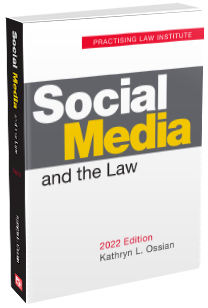
This book can help to minimize the risk of litigation and other legal problems arising from the use of social media platforms by analyzing it in various legal contexts, including privacy, civil litigation, employment, criminal activity and prosecution, intellectual property, defamation, advertising, and regulated industries. Relevant legislation, court opinions, usage trends, and industry responses are discussed.
Notable developments covered in the new edition are:
Use of technology by Human Resources departments (Chapter 6): Recent statistics on the growing use of AI, big data, and data analytics in employment recruitment are discussed.
Deceptive practices (Chapter 8): A new section discusses two self-regulatory programs operated by the Better Business Bureau that are of relevance to social media advertising: the National Advertising Division and the Children’s Advertising Review Unit, the latter of which issued revised guidelines that became effective on January 1, 2022.
Required disclosures in advertising (Chapter 8): In October 2021, the FTC began sending a series of Notices of Penalty Offenses to large numbers of businesses following an April 2021 Supreme Court decision that stripped the FTC of its authority to obtain monetary redress without first engaging in administrative proceedings.
Privacy of victims of crime (Chapter 9): A new section discusses the privacy and ethical issues arising from the provision of social media information about victims of crime.