Category Archives: Law Libraries

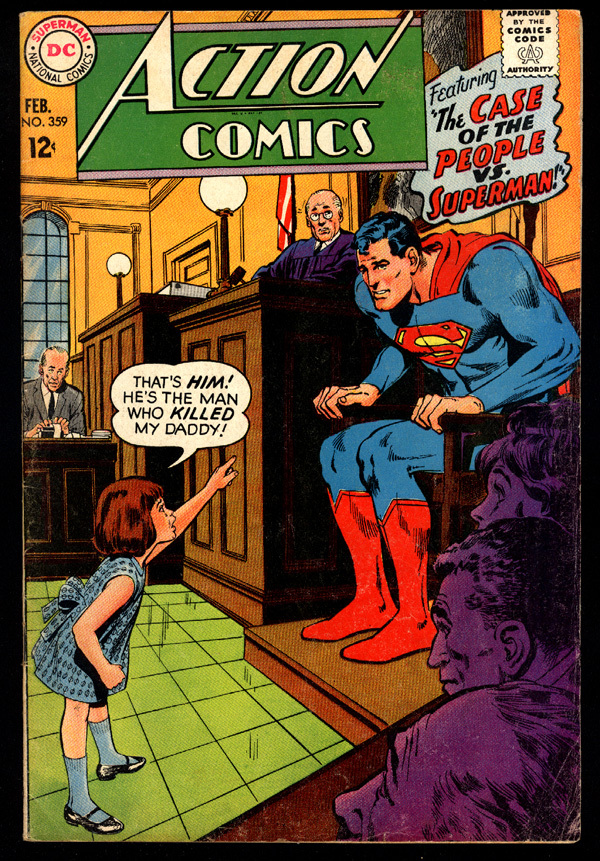
Superman’s Day in Court

What are the rare books librarians at Yale University up to these days?  Showing us how much fun archives really can be. 
The library has a show on called “Superheroes in Court!  Lawyers, Law, and Comic Books.”  The exhibit shows  images of courtroom drama and congressional inquiries from comic books.

The New York Times wrote about the exhibit here.

Exhibit information: “Superheroes in Court! Lawyers, Law and Comic Books”, curated by Mark S. Zaid, Esq., and on display Sept. 4-Dec, 16, 2010 in the Rare Book Exhibition Gallery, Level L2, Lillian Goldman Law Library, Yale Law School

Teachable Moments

As a librarian, don’t you just love a “teachable moment?” We all learned a major lesson  in library school—beware of internet sources.  The internet is a great place to find information, but it must be verified.  Well, apparently that’s a lesson Rush Limbaugh and his research staff recently learned.  The radio show was profiling Judge Roger Vinson.  The judge’s Wikipedia entry had false information in it which was reported on air according to the New York Times article here.   The judge took the incident in stride so there was no harm done and everyone learned a valuable lesson on source checking.

A Justice in His Own Words

Making Our Democracy Work, A Judge’s View, by U.S. Supreme Court Justice Stephen Breyer was released yesterday.  NPR reviewed the book and supplied an excerpt, click here to read it.  The book is a “combination of history and legal philosophy. It argues that there are no easy, color-by-the-numbers answers to many legal questions and that to suggest there are is an illusion.”  The book also delves into the difference of legal opinions that Breyer has had with Justice Antonin Scalia.

Interested in learning more about the Supreme Court and their significant cases?  Every year PLI holds its Supreme Court Review and publishes the accompanying course handbook by the same name.  The 12th Annual Supreme Court review will be published on October 30, 2010.  Click here to learn more.

FREE 1-Hour Briefing on Tax Research in the Library

PLI is holding a 1-hour briefing that looks at tax research in the library.  This briefing, entitled An Introduction to Tax Research in the Library: The Crossroad between Information and Practice, is free to all who register in advance.

This program reviews what  librarians, attorneys, and allied professionals need to know about tax research in order to support tax practice and aid other consumers of library reference services.  This course will shed light on sources that will help librarians, attorneys, and legal researchers find and navigate IRS pronouncements, tax news and secondary materials (both print and online, published and unpublished).  As an added bonus for the legal librarians who also have their JD and research attorney’s, CLE credit is available.

When: September 29, 2010

When: 1:00 – 2:00 pm

Format: Audio only

For additional information, or to register click here.

____

Please note this program has expired.  If you are interested in current PLI Library Programs, please visit www.pli.edu/libraryaudiobriefings.

The Billable Hour

And so the tug-of-war between billable hours and flat-fee arrangements continues to make news. Predictions have been made that the billable hours will eventually go away. Not so…or not any time soon, according to the WSJ Law Blog. WSJ looks at how a recent U.S. Supreme Court case contributes to this.

What does this mean to your law firm or research institution?

Interview with an MLIS Student: Natalie Pantoja

We interviewed Natalie Pantoja, a library student at Queens College, about her experiences in training, her thoughts on the future of the profession, and where technology fits into everything.


What role do you think technology is playing in your education and how will it impact your career?

Technology is the focus of all of my courses. Library education is structured around how we utilize technology to store, access, and use information. For my career, it is important that I learn to be flexible and knowledgeable about technology because certain aspects of it are always changing. The evolution of print to digital is the next frontier in the profession and I have to be prepared to be a middle woman between people and information.

Do you feel your education is adequately preparing you to enter the field?

I think the graduate program at Queens is probably like other programs in that it is what you make of it and so I’m going to try to learn everything I can about the field. Like any wide-eyed graduate student, I want to make my contribution and be innovative. So far, I have been learning how to catalog books and perform reference interviews.

The approaches librarians take to figure out what library users mean when they ask for a book/periodical/thing, is adapting to online reference tools. Google is the 21st century reference librarian, so we have to make technology better assist people in their searches. You have to instruct library users how to use reference sources and show them that there are resources beyond Google and Wikipedia.

How do you think the role of a librarian is changing and what part do you feel technology is playing in that? How is it staying the same.

I think that if you got your degree fifteen years ago you were probably learning different skills then you would be today. One thing that hasn’t changed about the profession is the importance of being able to help people access information. You have to teach people how to use technology to get what they want. This is difficult now because people are overwhelmed with information. Some of it false. Technology has also changed the way we keep bibliographic records and enhanced convenience for library users. Renewing books and ILL are easy to do online. Librarians are adapting to changes that are inevitable in the field. Google’s book digitization project has been in the news a lot lately, as has the Kindle. I think this is making librarianship more complex and it is really interesting to study what this will mean for libraries and archives.